Recent Project
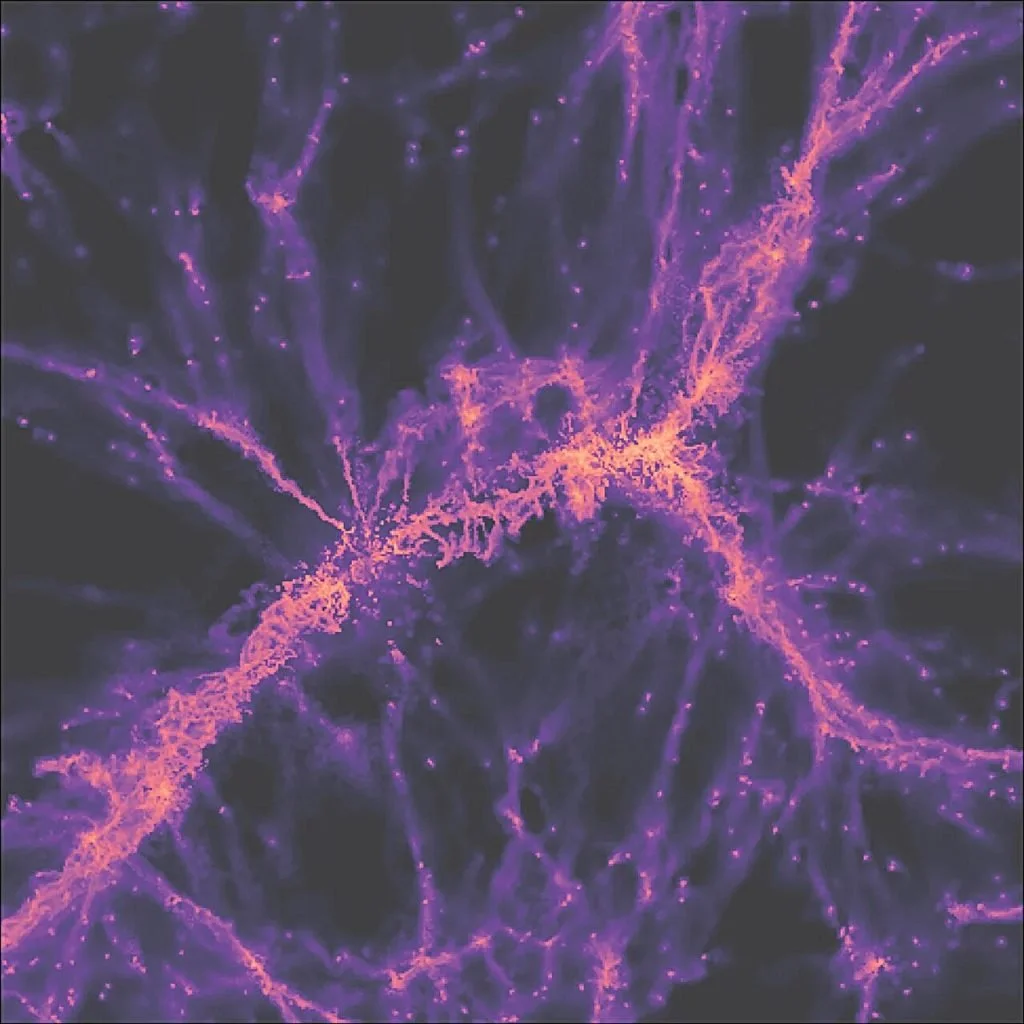
0.07 mm
It started with a question. If the Milky Way were the size of a grain of sand, how far away would Andromeda be? I wasn't looking for an artwork. I was trying to understand the scale of the universe. One answer led to another question, then another. I kept shrinking everything until the numbers stopped making sense in my head. Galaxies became almost invisible. Stars disappeared altogether. What was left wasn't matter. It was distance. That was the moment this piece appeared.
0.07 mm is the approximate diameter of a human hair. That measurement became the starting point for this work. Suspended in a darkened room, a robotic system slowly spins an almost invisible network of filaments. It begins near the floor and gradually works upward. There is no finished moment. Visitors arrive at different points in the process. Some may only see a moving point of light. Others may notice a handful of delicate strands. Someone returning weeks later will walk into a different room than the one they left.
The geometry comes from the cosmic web, the largest known structure in the observable universe, but this isn't really a work about astronomy. It's about trying to understand something that resists being understood. The more accurately I scaled the universe, the more it disappeared. At some point I realized I wasn't making a model of the universe anymore. I was making a room that asks what happens when something is almost beyond representation.
The robot doesn't perform. It doesn't explain itself. It just keeps making one connection after another. Quietly. Patiently. It doesn't seem to care whether anyone is watching. Over time a structure emerges from what first looked like empty space. The room changes so slowly that it becomes difficult to say exactly when nothing became something.
I don't think this work is about galaxies. I think it's about relationships. The ones we can see, and the ones we can't. The invisible structures that hold things together long before we ever notice they're there. The universe just happens to be the most honest example I've found.