Recent Project
The Ascent
I've spent much of my career trying to give physical form to ideas that normally exist only in conversation. Rather than illustrating concepts, I'm interested in building them. I want people to walk through them, feel them, become part of them. Architecture has an extraordinary ability to communicate before language does. A room can create anxiety. A corridor can create isolation. A staircase can reveal power. Long before we have the words, our bodies already understand what a space is asking of us.
The Ascent explores the architecture of opportunity. We often talk about success as though it is simply the result of determination, talent, or hard work. While those things undoubtedly matter, they rarely tell the whole story. Long before we take our first step, we inherit systems that shape our movement through the world. We don't choose the family we're born into, our race, our gender, our income, our citizenship, or countless other circumstances that quietly influence the opportunities available to us. Those systems are often invisible, particularly to those they benefit. My interest is in making those invisible structures tangible.
The installation begins before visitors realize they have entered the work. Everyone joins the same queue. There are no separate entrances and no visible distinctions. Each visitor receives what appears to be an ordinary admission card, something as forgettable as a subway pass or transit ticket. Nothing about the exchange suggests that anything important has happened. It feels routine, administrative, almost insignificant. Only later does the visitor discover that the card has already determined which systems of mobility are available to them. The decision has been made long before they understand there was ever a decision to make.
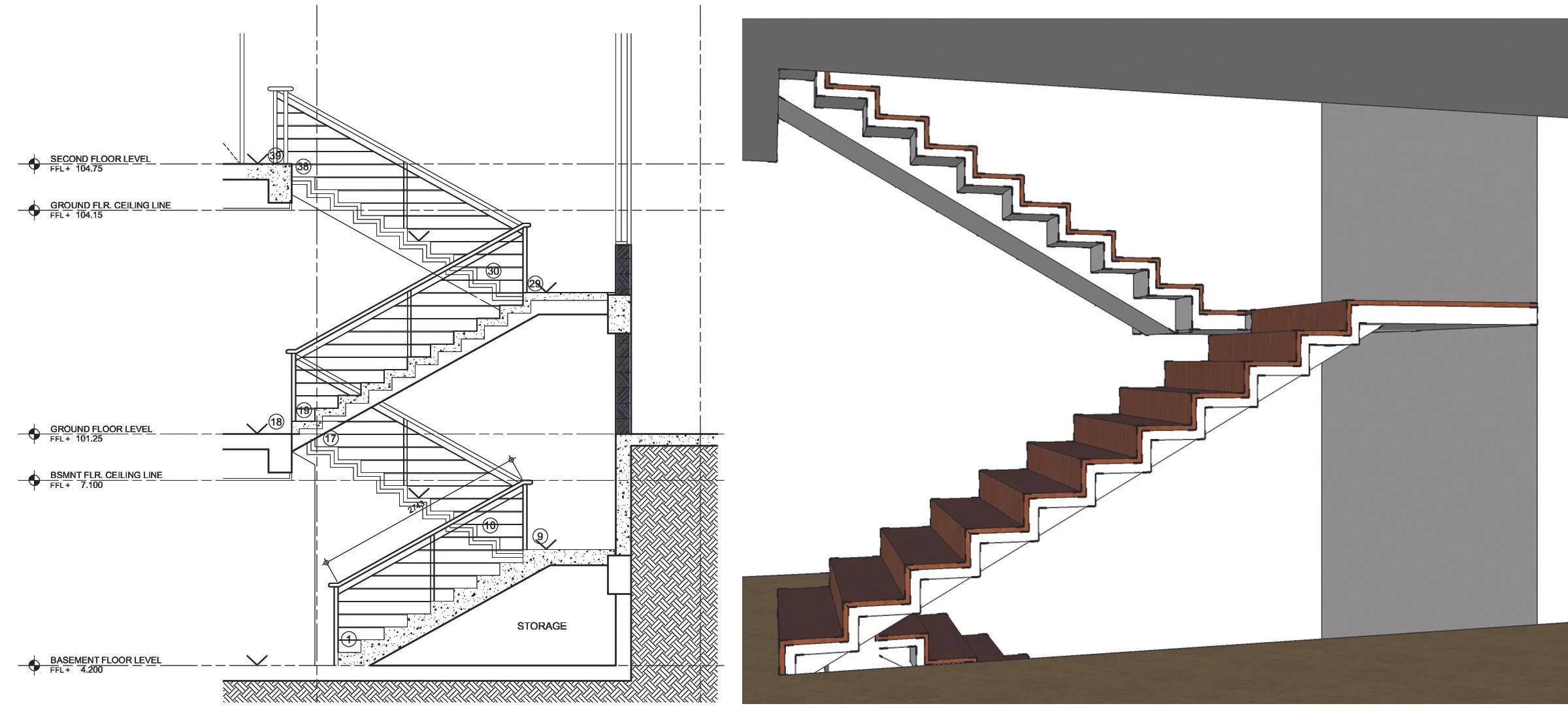
As visitors enter the monumental central structure, they encounter a series of turnstiles. The card unlocks only one path. Some visitors step onto a clean, uninterrupted escalator that quietly carries them toward a luminous opening high above. There are no obstacles, no decisions, no uncertainty. The mechanism simply does its work. Others find themselves entering a monumental staircase that appears to lead to exactly the same destination, but the experience is entirely different. The staircase changes direction constantly, folds back on itself, interrupts momentum, presents dead ends, false choices, and exhausting detours. Progress is always possible, but it is never straightforward. Every decision requires effort. Every landing raises new uncertainty. Eventually, after a long and demanding climb, the staircase joins the same upper platform reached effortlessly by the escalator. The destination is shared. The journey is not.
The architecture itself becomes the subject of the work. Rather than asking visitors to judge the people climbing the stairs, I hope they begin asking different questions. Why is one path effortless while another demands so much? Who decided these systems would exist? When did they become so familiar that we stopped noticing them? The installation does not suggest that effort is meaningless. Quite the opposite. It acknowledges that effort matters deeply. What it questions is our tendency to pretend that every climb begins from the same place and follows the same terrain.
The structure is conceived as a monumental sculptural tower rising approximately thirty-five to fifty feet within a large gallery or public atrium. A single escalator forms one elegant vertical line while an intricate network of staircases wraps around it, crossing, looping, and weaving through exposed structural steel. From the floor below, visitors can watch people moving through entirely different systems at the same time. Some glide upward almost effortlessly while others climb, pause, retrace their steps, and continue. The sculpture is never static. Its movement is created entirely by the people inhabiting it.
The material language is intentionally restrained. Exposed galvanized steel, industrial grating, structural members, concrete, glass, and light create a space that feels more like infrastructure than sculpture. It should resemble something that could already exist within the built world. The destination above remains visible throughout the experience, marked only by light rather than an object or reward. Visitors always know where they are trying to go, even if the route feels uncertain.
Although the work grows from questions of opportunity and mobility, I do not see it as a finished statement. I see it as an architectural framework for collaboration. The structure is capable of holding many conversations about systems that shape our lives, including systemic racism, colonialism, gender, disability, poverty, and other forms of structural inequality. Those conversations should not be mine alone to tell. My role is to build the architecture. I hope to invite artists, historians, Indigenous knowledge keepers, disability advocates, and others with lived experience to shape how those spaces speak from within the structure itself.
Ultimately, The Ascent asks a simple question. If opportunity exists at the top of the staircase, how much of the journey was determined before we ever took the first step? My hope is that visitors leave thinking less about individual success or failure and more about the invisible architecture that quietly shapes the climb for all of us.